Or why some seats feel great for an hour, but leave you aching by the end of a long shift?
There’s a massive difference between a seat that just feels cosy and one that actively protects your health. When one of our project managers was recently asked this exact question on-site, we realized it’s a distinction worth clearing up for anyone working in demanding environments like control stations.
🔹 Comfort is about how a chair feels right now—think immediate softness, plush padding, and short-term relaxation.
🔹 Ergonomics is about what’s good for your body over time—scientifically engineered to align posture, reduce muscle strain, and prevent fatigue.
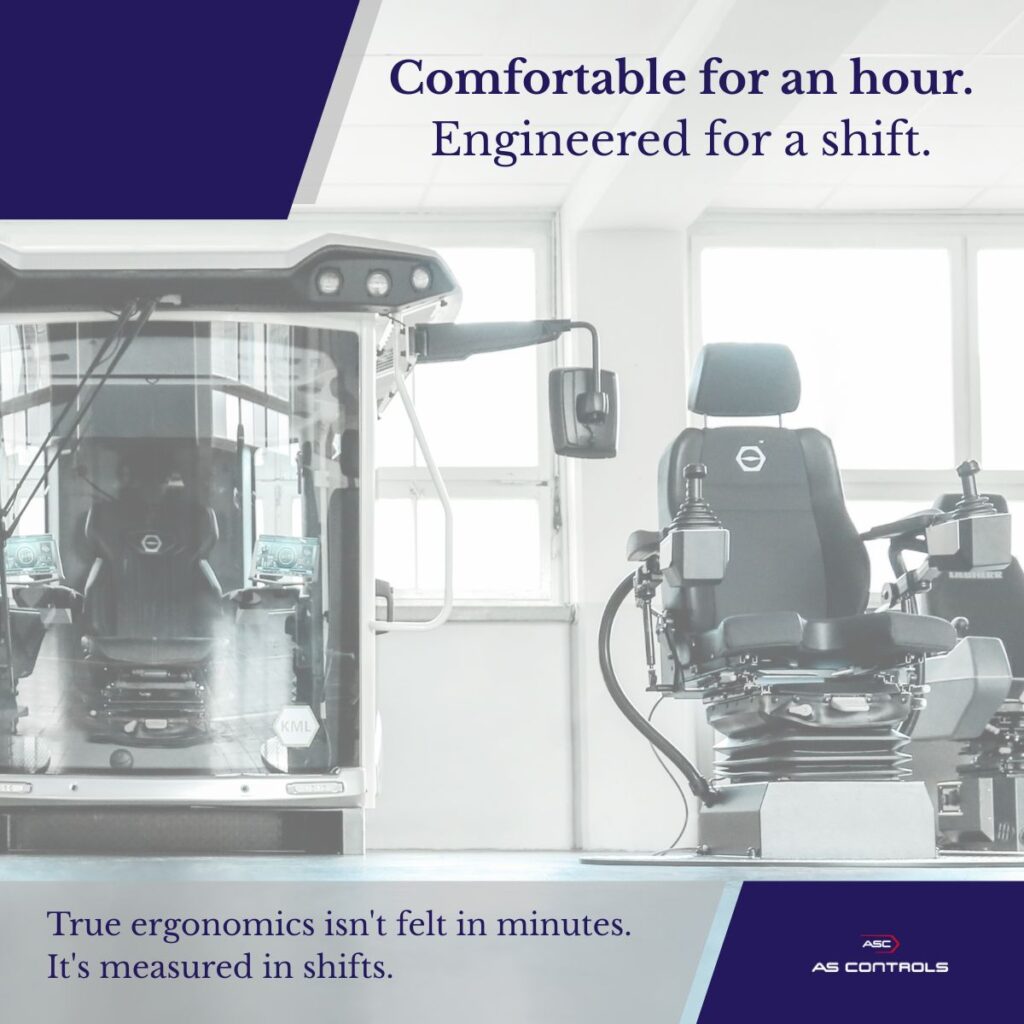
In heavy-duty industries, relying on short-term comfort alone isn’t enough. Poor posture and static seating lead to physical strain, reduced concentration, and costly downtime.
That’s why industry leaders like Spohn and Burkhardt collaborated with TU Dresden on extensive biomechanical studies and user surveys for the FSMMD Ultra—ensuring every feature is backed by real science.
The winning formula? Combining both. True workplace wellbeing requires supportive, breathable materials for long shifts paired with intuitive adjustments, proper lumbar support, and dynamic movement.
Investing in scientifically backed ergonomic seating isn’t just buying a chair—it’s protecting long-term health, boosting operator focus, and safeguarding your operational efficiency.
How are you prioritising operator health in your control rooms? Get in touch with our team to see how we can help.
Take a look at our TU Dresden workplace analysis here: